Heads of State the U.S. has captured or killed
Discover every head of state the U.S. has captured or killed, from Aguinaldo and Saddam to Maduro and Khamenei, and their global impact.

By Edem Kwame
Published Updated 4 min read
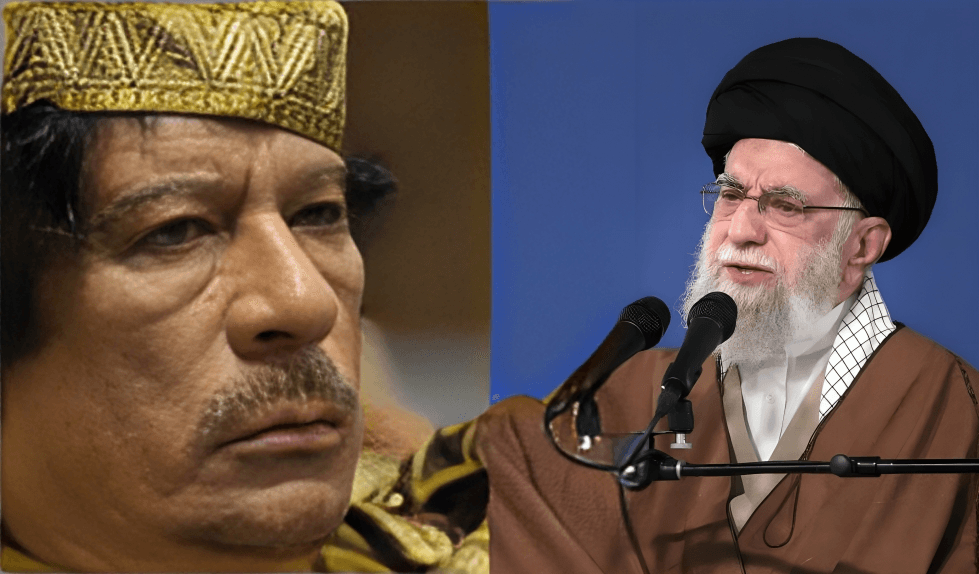
A detailed look at every head of state the United States has captured or killed, from Emilio Aguinaldo and Saddam Hussein to Nicolás Maduro and Ayatollah Ali Khamenei, and the global impact of these actions.
The killing of Iran's Supreme Leader, Ayatollah Ali Khamenei, in a joint U.S.-Israeli military strike in February 2026 sent shockwaves across the world. For many, it was unprecedented, a sitting head of state eliminated by American military force.
While the scale of Khamenei's death is extraordinary, the United States has a long history of capturing or killing foreign leaders it regards as threats. From the jungles of the Philippines more than a century ago to the streets of Caracas, here are the heads of state the United States has captured or removed.
Also readOUR TIME: WHEN THE PAST MEETS THE PRESENT
Captured
Emilio Aguinaldo, President of the First Philippine Republic (1901)
Emilio Aguinaldo, the first president of the Philippine Republic, was captured by U.S. forces during the Philippine-American War in a covert operation in March 1901. His arrest significantly weakened organised Filipino resistance to American colonial rule. Although the republic lacked broad international recognition, Aguinaldo functioned as its head of state. His capture remains one of the earliest examples of the United States detaining a foreign leader during armed conflict.
In December 1989, the United States launched Operation Just Cause, invading Panama to remove Manuel Noriega, the country’s effective ruler. Noriega, a former CIA asset, sought refuge in the Vatican diplomatic mission before surrendering. He was flown to the United States, tried on federal drug trafficking charges, and sentenced to prison. The operation blurred the lines between military intervention and law enforcement.
Saddam Hussein, President of Iraq (2003)
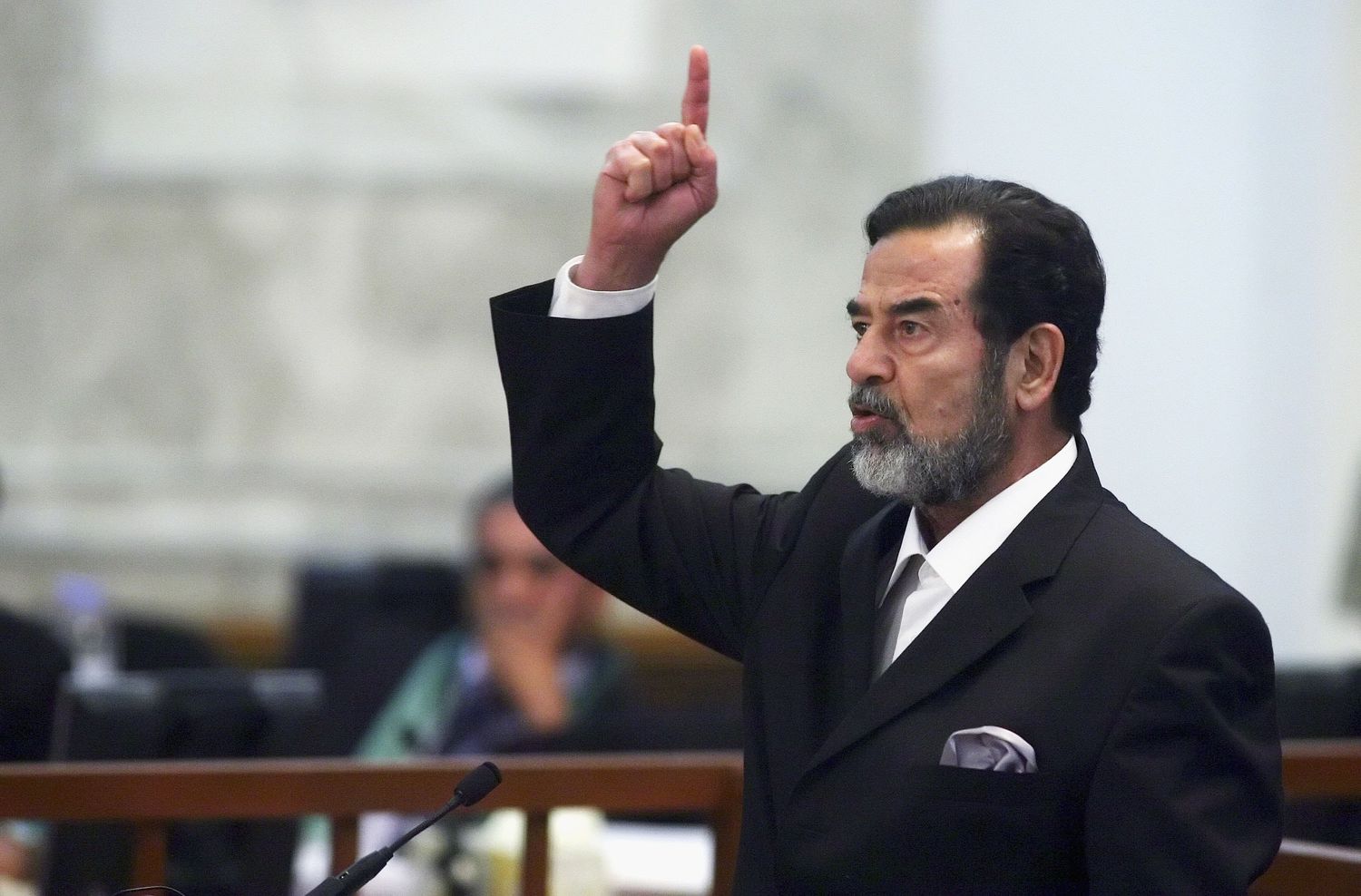 Saddam Hussein [Getty Images]
After the U.S.-led invasion of Iraq in March 2003, Saddam Hussein went into hiding following the fall of Baghdad. In December 2003, he was captured near Tikrit hiding in an underground chamber. Footage of his medical examination was broadcast globally. He was later tried by an Iraqi tribunal and executed on 30 December 2006.
Also readTHE TROTRO PHARMACIST: SELF-MEDICATION CRISIS IN GHANA
Juan Orlando Hernández, President of Honduras (2022)
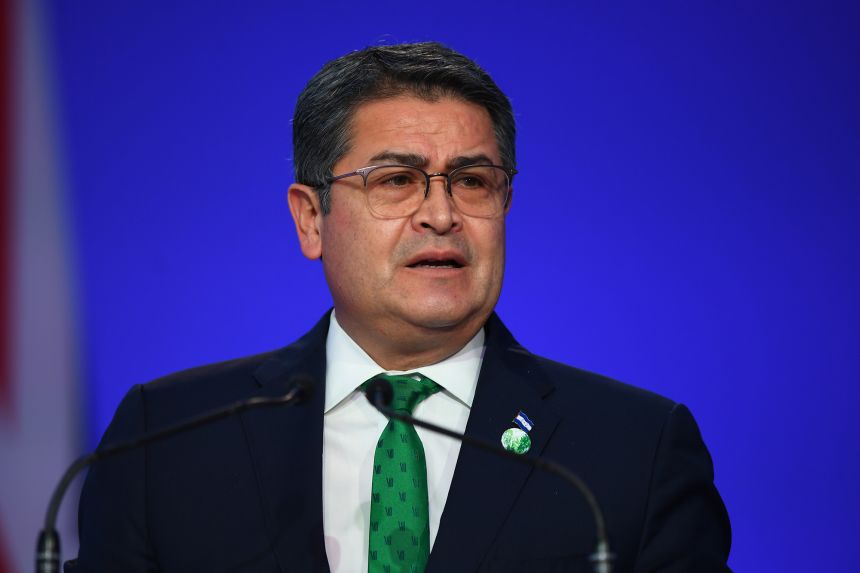 Juan Orlando Hernández presents his national statement during day two of COP26 at SECC on November 1, 2021 in Glasgow, United Kingdom. Andy Buchanan/Pool/Getty Images
Juan Orlando Hernández, President of Honduras from 2014 to 2022, was arrested by Honduran authorities shortly after leaving office, following a U.S. extradition request. He faced federal charges of drug and weapons trafficking in the United States. A federal jury convicted him, and he was sentenced to 45 years in prison. His case is one of the few instances of a former head of state prosecuted in a U.S. court.
Nicolás Maduro, President of Venezuela (2026)
In January 2026, U.S. forces conducted a military operation in Caracas, resulting in the arrest of sitting President Nicolás Maduro. He was transported to New York to face federal charges, including narco-terrorism and drug trafficking. The operation drew condemnation from several governments as a violation of Venezuelan sovereignty, while others welcomed it. Maduro pleaded not guilty. His arrest marked a rare instance of a sitting South American head of state physically removed from power by U.S. forces.
Killed
Muammar Gaddafi, Leader of Libya (2011)
Muammar Gaddafi ruled Libya for more than four decades. In 2011, the Arab Spring sparked a civil war, prompting the United States and NATO to intervene under a United Nations mandate to protect civilians. In October 2011, a NATO airstrike hit Gaddafi’s convoy as he attempted to flee Sirte. He was captured shortly afterwards by rebel forces and killed. While U.S. forces did not directly execute him, American military action played a decisive role in the events leading to his death.
Also readMarriage or Engagement? How Ghana Came to Call Customary Marriage an Engagement
Ayatollah Ali Khamenei, Supreme Leader of Iran (2026)
Iran’s Supreme Leader Ayatollah Ali Khamenei waves during the 36th anniversary of the death of the leader of Iran’s 1979 Islamic Revolution, Ayatollah Ruhollah Khomeini, at Khomeini’s shrine in southern Tehran, Iran, June 4, 2025. — Reuters
In February 2026, a joint US-Israeli military operation killed Iran’s Supreme Leader, Ayatollah Ali Khamenei. The strikes targeted military and intelligence facilities in addition to Khamenei himself. No sitting leader of Iran had ever been killed by a foreign power in the modern era. The geopolitical consequences continue to unfold, with analysts debating whether this marks a turning point in Middle Eastern history or the start of a more volatile chapter.
A Pattern Across Generations
From Emilio Aguinaldo’s capture in 1901 to Khamenei’s death in 2026, the United States has repeatedly demonstrated a willingness to remove leaders it perceives as threats. Each case carried its own justification, controversy and consequence. Taken together, these actions trace a century-long thread of American influence and intervention in global politics.
SOURCE: Pulse Ghana
Edem Kwame
Chief Editor
Edem Kwame is a staff journalist at GH News Media, where he covers news, sports, politics and current affairs with a sharp focus on Ghanaian and African football.
More from Edem Kwame