US and Saudi Arabia launch strikes on Iran-backed militias in Iraq as Middle East tensions escalate
US and Saudi Arabia launch airstrikes on Iran-backed militias in Iraq after missile and drone attacks, escalating tensions across the Middle East.

By Edem Kwame
Published Updated 3 min read
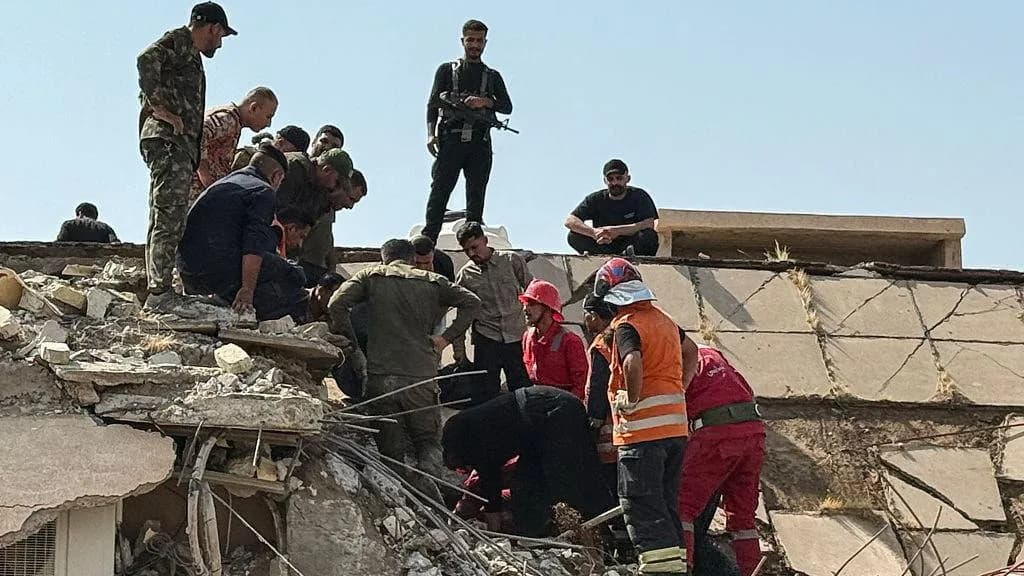
The United States and Saudi Arabia have carried out coordinated airstrikes against Iran-backed militias in Iraq, marking a significant escalation in regional tensions following renewed hostilities between Washington and Tehran.
According to the US Central Command (CENTCOM), the strikes targeted "Iran-aligned terrorists" directed by Iran's Islamic Revolutionary Guard Corps (IRGC) to launch attacks against US military personnel and Saudi energy infrastructure.
PMF reports casualties after airstrikes
Iraq's Popular Mobilisation Forces (PMF), a paramilitary coalition largely made up of Iran-backed Shia militias, said at least 20 fighters were killed and 32 others wounded after multiple US-Saudi strikes hit several of its bases across eastern Iraq.
The PMF condemned the attacks as a "dangerous escalation" and accused the US and Saudi Arabia of violating Iraq's sovereignty.
Iran launches missiles at US positions.
The airstrikes came just hours after CENTCOM said Iran had fired missiles at US military positions in the Middle East in what it described as an attempted surprise attack.
Also readPatience Akyianu, former Barclays Bank Ghana MD and Hollard CEO, reportedly dies
The US military said the missiles were launched at 5:45 p.m. EDT (9:45 p.m. GMT) on Tuesday but confirmed that all incoming projectiles were successfully intercepted, preventing casualties or damage.
Iran's Revolutionary Guard later claimed responsibility for the missile attack, saying it had targeted a US airbase and a command centre in Jordan in retaliation for what it described as American aggression.
Fresh attacks in the Strait of Hormuz
The IRGC also claimed its naval forces struck three oil tankers in the strategically important Strait of Hormuz, alleging the vessels ignored warnings while navigating what it called an "unsafe and illegal route".
The Strait of Hormuz remains one of the world's most critical oil shipping lanes, and any disruption to maritime traffic has the potential to affect global energy supplies.
CENTCOM blames Iran-backed militias
CENTCOM said the joint operation was launched in response to more than 30 drone attacks allegedly carried out over the past 72 hours by militias supported by Iran's Revolutionary Guard.
Also readL.I. 2519: Full list of road traffic offences and jail terms in Ghana
The US military described the drone attacks as unsuccessful and warned that additional military action could follow if the assaults continue.
"The IRGC and its terrorist proxies must cease these attacks to avoid further U.S. military response," CENTCOM said in a statement.
Iran denies involvement.
An Iranian defence official rejected accusations linking Tehran to the recent drone attacks on Saudi Arabia, calling the claims a "major miscalculation".
The denial came after Saudi Arabia announced that its air defences had intercepted and destroyed drones targeting petroleum facilities in the country's eastern region.
Saudi defence officials alleged the drones were launched by Iran-affiliated militia groups operating from Iraqi territory.
Diplomatic hopes fade
The renewed violence comes just a day after US President Donald Trump spoke of "very friendly negotiations" with Iran, raising hopes of easing tensions after a brief pause in military exchanges.
That lull followed nearly two weeks of sustained US airstrikes on targets inside southern Iran, which Washington said destroyed key military infrastructure, including tunnels and bridges.
Despite talk of diplomacy, disagreements over the Strait of Hormuz remain a major obstacle, with Iran continuing to deny that formal negotiations are taking place.
Oil prices rise.
Global oil prices climbed in early trading on Wednesday as investors reacted to fears that escalating military action around the Strait of Hormuz could disrupt one of the world's busiest energy shipping routes.
The latest developments have heightened concerns that the conflict could further destabilise the Middle East and impact global energy markets.
Edem Kwame
Chief Editor
Edem Kwame is a staff journalist at GH News Media, where he covers news, sports, politics and current affairs with a sharp focus on Ghanaian and African football.
More from Edem Kwame