A certificate is not a customer: The next test for Ghana’s new apprentices
Thousands of young Ghanaians have completed training under the National Apprenticeship Programme, but the bigger challenge lies ahead. Can the 13,309 graduates turn their new skills into paying jobs, reliable customers and sustainable livelihoods?
By Edem Kwame
Published 5 min read
By Douglas Vandergraph (https://douglasvandergraph.com)
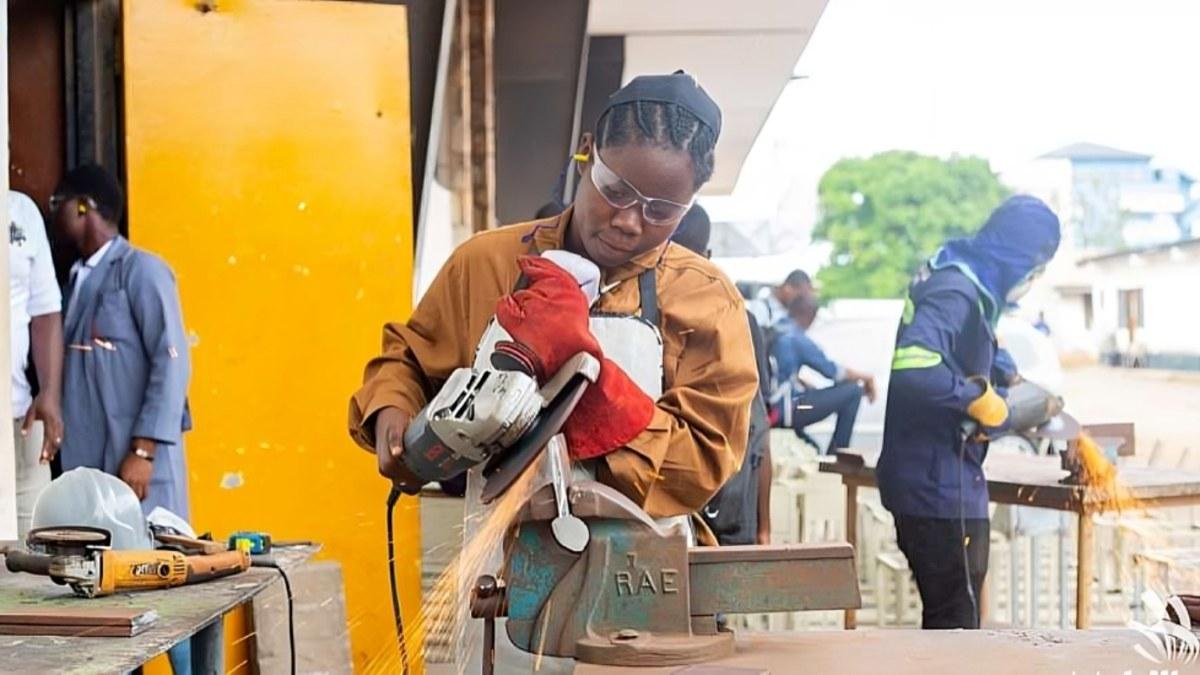
For 13,309 young Ghanaians, this week brought a moment worth celebrating. The National Apprenticeship Programme held its first national graduation ceremony in Accra, recognising people trained in trades ranging from agriculture and electrical work to catering, hospitality and fashion.
A young person who has worked through a demanding course deserves that public recognition. But the real test of this programme begins after the graduates put away their certificates: can they earn a living without having to start their struggle all over again?
That question should shape how Ghana judges the programme over the coming year. The Ghana News Agency reported on November 21 that 14,335 people had enrolled in the pilot and 13,309 graduated.
It also reported that 112 graduates were persons with disabilities, below the programme’s stated five-per-cent target. These figures tell us something important about participation and completion.
They do not yet tell us how many graduates can find paying customers, retain reliable work, or support their households three or six months from now. An honest celebration can acknowledge both achievements and unanswered questions.
The National Youth Authority says graduates will be able to use its newly launched NAP Connect platform to show their work and reach prospective customers.
Officials also described competency assessments, certification and start-up kits, while the youth ministry discussed shared workspaces and potential spaces for young traders in new markets.
Those are promising bridges between training and employment. They should be measured as bridges, however, not counted as destinations merely because they have been announced.
Consider the first months after graduation for a newly trained electrician or dressmaker. A certificate may demonstrate what the person learned; it does not introduce a trustworthy first customer, provide affordable transport, cover a tool repair or settle the question of where to work.
A graduate in a district far from an urban market could face a different set of obstacles from one with an established family business nearby.
Those are examples of possible barriers, not claims about any particular graduate. Good programme design asks about them before a person disappears from the statistics.
Ghana could make the next phase more accountable with a simple, published follow-through measure. At 30, 90 and 180 days, report aggregate outcomes by region and trade: how many graduates have completed at least one paid job, how many are regularly earning from their skill, and how many still need help finding work.
Report participation and outcomes for women and people with disabilities without exposing anyone’s private details. Where data are incomplete, say so.
A public dashboard is useful only if it reports a real change in someone’s working life, not merely that another dashboard exists.
Also readNew Cedi Notes: What does Ghana stand to gain?
The first paid job deserves particular attention. Local businesses, community organisations and public institutions can help by making small, properly priced opportunities visible: a repair contract, a catering order, a garment alteration, routine maintenance.
Where public purchases are involved, procurement rules and fair competition must still apply. The point is not to guarantee a contract to anyone. It is to make the route from demonstrated competence to legitimate opportunity understandable, instead of leaving a new graduate to guess who knows whom.
The platform must also work for people who cannot rely on constant mobile data, costly advertising or a polished online portfolio. A verified directory that can be accessed through a basic phone or a nearby youth resource centre would make the programme more useful beyond the best-connected neighbourhoods.
Clear consent, safe contact options and protection against fraudulent listings matter as much as a modern interface. A system that helps customers find workers should not quietly expose young workers to unnecessary risk.
The disability gap calls for more than a line in a speech. If the programme intended five per cent participation by persons with disabilities but graduated 112 people in that category, managers should explain what happened at recruitment, training locations, practical assessments and placement.
Accessibility should be checked with the people who use the service, not assumed from a policy document. There is no dignity in inviting someone into training and then giving them tools, markets or instructions they cannot actually use.
Jesus spoke about the wise builder who laid a house on rock rather than sand. In Matthew 7:24–27, the difference became visible when difficulty arrived. That teaching is about hearing his words and putting them into practice, not an economic blueprint.
Also readThe girls missing from the register deserve more than a pad distribution
Still, it offers a useful moral challenge to anyone entrusted with helping a neighbour: do not confuse an impressive beginning with a foundation strong enough to carry the person through hard weather. A graduation ceremony is a beginning. Sustainable work is the harder construction.
Ghana should therefore ask its programme leaders for one practical next step: publish a timetable for post-graduation tracking, alongside a clear way for graduates to request assistance without a personal connection. Invite employers and craft associations to explain where verified first-work opportunities can be found.
Let graduates report whether a kit arrived, whether a promised workspace exists and whether a customer could actually reach them. Answering those questions would be more respectful than another round of congratulatory photographs.
The 13,309 graduates earned their applause. Now the institutions celebrating them must earn the graduates’ confidence.
The most meaningful headline a year from now will not be that thousands received certificates. It will be that more of those young people can honestly say, ‘I learned a skill, someone trusted me with real work, and I can keep going.’
Sources for editorial verification
Ghana News Agency, 21 November 2026: https://gna.org.gh/2026/11/more-than-13000-youth-graduate-from-national-apprenticeship-programme/
Ghana Point editorial policy and opinion section: https://ghanapoint.com/editorial-policy ; https://ghanapoint.com/opinions
Edem Kwame
Chief Editor
Edem Kwame is the Chief Editor at Ghanapoint.com, where he covers news, sports, politics and current affairs with a sharp focus on Ghanaian and African football.
More from Edem Kwame